Search The Editor's Blog

Showing posts with label Book Review. Show all posts

Thursday, March 20, 2014

((  Written By: Nani Hapa ))  Six years ago,
when Ishmael Beah (Sierra Leone) published his bestselling memoir A Long Way Gone, readers were exposed to a harrowing account of Sierra Leone’s civil war and the horrific abuse child soldiers both endure and perpetrate.  Radiance of Tomorrow, Ishmael’s first novel, explores what happens once the civil war is over when victims and perpetrators seeking to restore peace in a country they share are required to reconcile with what they did and what was done to them.

At the center of Radiance of Tomorrow are Benjamin and Bockarie, two longtime friends who return to their hometown, Imperi, that is left in ruins after the civil war.  Despite uncertain times, Benjamin and Bockarie try to forge a new community by taking up their former posts as teachers, but they’re plagued by one obstacle after the other as more villagers return to Imperi:  a scarcity of food; a rash of serious crimes (including murders, theft, rape); and the depredations of a foreign mining company intent on sullying the town’s water supply and blocking its paths with electric wires.  Still, armed with an improbable sense of hope, Benjamin and Bockarie work against the odds to preserve, and in some cases restore, what means the most to them.

Radiance of Tomorrow is a moving novel that will leave you thinking critically about postwar life in those regions of Africa still reeling from conflict.

Tuesday, December 31, 2013

((  Written By: Mia Leheluka  ))  Following the the critical acclaim and success of Aya de Yopougon, Marguerite Abouet (Ivory Coast) is now dedicating all of her time to writing.  (Even more impressive, she is also the director of a charity that she created to help children in Africa get better access to books.)  Earlier this summer, Abouet teamed up with long-time collaborator, illustrator Mathieu Sapin (France), to release another beautifully illustrated graphic novel—Akissi: Feline Invasion—a series of vignettes aimed at a younger audience.

The children’s book follows Akissi, “a true adventurer, full of silliness and fun,” her brother Fofana and her friends as they get into trouble for their neighborhood exploits.  In the vignette “Good Mums,” for example, Akissi borrows a neighbor’s baby and tenderly feeds it a stew concocted from discarded scraps found in the market.  According to the publisher, readers can expect this and other vignettes where: “the neighborhood cats are pursuing [Akissi] to steal her fish, her little monkey Boubou almost ends up in a frying pan, and she’s nothing but a pest to her older brother Fofana, but ... nothing will scare her for long!”

I thoroughly enjoyed the Aya de Yopougon series, and am looking forward to sharing this one with my younger nieces.

Friday, September 20, 2013

((  Written By: Staff Writer  ))  NoViolet Bulawayo’s compelling debut semibiographical novel, We Need New Names, is the story of protagonist Darling, who we meet as a 10-year old child in Robert Mugabe’s Zimbabwe. Darling’s mother is impoverished and left with nothing more than her faith in God and a tin shack from which to raise her daughter.  Darling’s father is absent (he went to South Africa looking for work), and he returns home only because he has become devastatingly sick with AIDS.  And so with the help on an aunt living in America, Darling leaves behind everything that makes her who she is, “because it is no longer possible to stay.”  As a teenager in America, Darling acquires an American accent and quickly adopts the habits of her school friends—listening to Rihanna, wasting afternoons at the mall, and even watching pornography online.  Still, Darling is not quite at home in America yet she struggles to remain connected to her now fragile Zimbabwean roots, and this tension is palpable when she talks to her childhood friends, one of whom says what everyone, including Darling, is thinking:  “Darling, my dear, you left the house burning and you have the guts to tell me, in that stupid accent that you were not even born with, that doesn’t even suit you, that this [Zimbabwe] is your country?”

Without a doubt, the strongest part of We Need New Names is the first half, when Darling is in Zimbabwe, narrating as a child with no political agenda or self-conscious hang-ups.  Once Darling gets to the United States, the narrative weakens and at times is somewhat less interesting, if only for its familiarity (here, Chimanda Ngozi Adiche's Americanah shines).  The novel, however, remains powerful, poetic and moving, and one cannot help but remain connected to the poignant story of Darling’s life.  It's easy to connect to Darling's point of view, and her story of displacement both in Zimbabwe and America.

Monday, September 9, 2013

((  Written By: Staff Writer  )) The immensely talented award-winning author Chimamanda Ngozi Adichie’s latest novel Americanah is as much a love story about two star-crossed lovers as it is a blunt and unflinching exploration into class, race, and national identity.  As teenagers in a Lagos secondary school, Ifemelu and Obinze fall in love at a time when Nigeria is under military dictatorship, and people are leaving the country if they can. Ifemelu—beautiful, self-assured—departs for America to study. Obinze—the quiet, thoughtful son of a professor—had hoped to join her, but post-9/11 America will not let him in, and he plunges into a compromising, undocumented life in Britain. Years later, Obinze is a wealthy man in a newly democratic Nigeria, while Ifemelu has achieved success as a writer of an eye-opening blog about race in America called “Raceteenth or Various Observations About American Blacks (Those Formerly Known as Negroes) by a Non-American Black.” But when Ifemelu returns to Nigeria, and she and Obinze reconnect, the two are forced to reconcile their new selves with their past that seemed destined for marriage.

As the novel nears end, Americanah comes dangerously close to crossing the line into an overly dramatic story—much like the stuff of Nollywood films—but Americanah more than makes up for this shortcoming with its fearless, intimate and blunt interrogations of hefty subjects like race, class, social manners, and even black women’s hair secrets.

Friday, September 6, 2013

((  Written By: Staff Writer  ))  Author Taiye
Selasi takes on an ambitious goal in her debut novel, Ghana Must Go:  to tell a cohesive story about a fractured Ghanaian family from the various (and often different) perspectives of each family member.  The novel opens with the patriarch, Kweku Sai, slowly dying in his beloved garden in Ghana.  The reader quickly learns that many years ago—in a time that seems like a lifetime ago—Kweku was a successful surgeon in the United States with a picture perfect nuclear family—a wife, a first-born son, fraternal twins, and a last born daughter.  But that idyllic life soon comes to an end, when his career is jeopardized and Kweku makes the choice to spare his family from his professional and financial adversity by leaving them.  What follows are years of intricately weaved events, pulled from each of the Sai’s lives, that tell the stories of their well-intentioned strides to not only survive, but excel as model immigrants, despite having the fabric of their family unraveled by their absent father.

In telling the complex life stories of each of the Sais, the novel occasionally gets bogged down in detailed prose about issues not central to the plot, which can be distracting.  And, as often happens when an author tries to tell the perspectives of various characters, there are times when the novel does not reveal enough about the Sais to fully understand each of their motivations.  Notwithstanding these quibbles, the fact of the matter is Ghana Must Go has received heaps of praise from critics and readers alike, and I’d be hard pressed to say that it’s not well deserved.  The novel is a richly textured and beautifully layered exploration into the indelible complexities faced by modern African families with ties to the Diaspora and the Continent.

Wednesday, January 23, 2013

((  Written By: Staff Writer  ))  The debut novel from  author Faiza Duale—"An Impossible Love"—is an epic modern-day African Cinderella story.  Having lost her entire family in Somalia, Yasmin Hirsi was forced to live as a poor relation/servant with her horrid aunt and her aunt's two equally horrid daughters in Nairobi. When Yasmin was ten, her aunt kicked her out of the house, but luck finally found her in the guise of Nur Adam, the wealthy aging father of Ali Adam, her childhood crush.   And with that premise Faize is not afraid to dive straight into the literary deep end, tapping into rich themes like love and social expectations from a uniquely African perspective.

As a woman, Yasmin could never show her love for Ali, given that it was doomed by her past and their class differences.  When Ali returns from his studies abroad, Ali discovers nothing is quite the same, certainly not the sensuous beauty who he believes had preyed on his father's kindness.  Believing that Yasmin had tricked and wormed her way into his father's affection under false pretenses, he could never forgive her and would make sure she never took advantage of his father again.  But when he closes his eyes, why does she haunt his dreams?

And so sets the stage for a story that proves that the classic story of Cinderella that is an authentic reflection of Africa and influenced by Faiza's own travels—Faiza was born in Somalia, lived in Kenya, and moved to the U.S. with her family as a teenager.

Tuesday, July 10, 2012

((  Written By:  Staff Writer  )) With everything from a searing history lesson in fictional form to an anthology of short stories suffused with beauty, sorrow, and longing, these are MIMI’s picks for the books that good reads are made of this season.

1.  The Spider King's Daughter by Chibundu Onuzo:  This modern-day Romeo and Juliet story is set against the backdrop of a changing Lagos, a city torn between tradition and modernity, corruption and truth, love and family loyalty. Seventeen-year-old Abike Johnson is the favorite child of her wealthy father. She lives in a sprawling mansion in Lagos, protected by armed guards and ferried everywhere in a huge black jeep. But being her father's favorite comes with uncomfortable duties, and she is often lonely behind the high walls of her house.  A world away from Abike's mansion, in the city's slums, lives a seventeen-year-old hawker struggling to make sense of the world. His family lost everything after his father's death and now he runs after cars on the roadside selling ice cream to support his mother and sister. When Abike buys ice cream from the hawker one day, they strike up an unlikely and tentative romance, defying the prejudices of Nigerian society.  But as they grow closer, revelations from the past threaten their relationship and both Abike and the hawker must decide where their loyalties lie.

2.  How to Read the Air by Dinaw Mengestu:  In this novel that tells the immigrant experience across two generations we trace Jonas Woldemariam who in an attempt to understand his cultural heritage, leaves behind his marriage and job in New York and sets out to retrace his mother and father's history as young Ethiopian immigrants.  Jonas goes on a journey that takes him from a war-torn Ethiopia that his parents knew to a brighter vision of his potential in America.

Find out the rest of What We're Reading Now by checking out the latest issue of MIMI.

((  Photo Credits:  Wave Break Media Micrro | Veer  ))

Wednesday, April 11, 2012

((  Written By:  Staff Writer  ))  Author Lola Jaye's novel, Being Lara, will keep you turning the pages from beginning to end. The story centers around Lara (née Omolara), a protagonist who always knew she was different.  As a little girl living in England, she realized she looked different from everyone in her family with her dark complexion and curly hair.  Lara has a hard time finding out the reality of her situation, but on her thirtieth birthday, Lara, always in control, gets the surprise of her lifetime when a stranger—a woman in a blue-and-black head tie—claims to be her mother. Unexpected, dangerously unfamiliar emotions are turning Lara's life upside down, pulling her between Nigeria and London, forcing her to confront the truth about her past.  But if she's brave enough to embrace the lives of her two mothers, she may discover once and for all what it truly means to be Lara.

Being Lara is an unforgettable tale of three women—a British mother, a Nigerian birth mother, and Lara a 30-year-old daughter—the choices they made, and the fragile bond they try to create across time and continents.  Author Lola Jaye says, "I like to write about relationships.  Not just about men and women, but between families.  While You Were Dreaming, focuses on sisters.  By The Time You Read This … on the bond between a father and his daughter.  My latest novel Being Lara, although focusing on the relationship between mothers and a daughter … the story ultimately see’s Lara, the main character, find and accept a relationship with herself.  Confused…?  Read the book (please?)."

Pick up your copy of Being Lara from www.Amazon.com.

((  Photo Credits:  Book Cover Art  ))

Thursday, May 5, 2011

Written By: Nicole Parker-Jones—Set on the campus of a Nigerian university, Double Yoke tells the story of two undergraduates who must confront the conflicting demands of tradition and modernity. While Nko pursues an education despite the resistance of those who feel a woman's identity is assumed in traditional marriage, Ete Kamba's love for her is severely tested as he is himself locked into the rigid attitudes from which Nko is attempting to break free. Nko must further contend with unscrupulous professors who would take advantage of her tenuous role as a woman in a male-dominated environment. As the author candidly portrays the status of women in emerging African nations, the choices facing Ete Kamba and Nko are neither clearcut nor perfect. In Double Yoke, Buchi Emecheta faces them head on.


(Photo Credits: Book Cover Art)

Monday, April 18, 2011

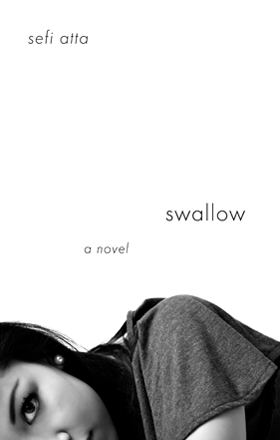
Written By: Nicole Parker-Jones—It is the mid-1980s in Lagos and the government’s War Against Indiscipline and austerity measures are fully in operation. Tolani Ajao is a secretary working at Federal Community Bank. A succession of unfortunate events leads Tolani’s roommate and colleague, Rose, to consider drug trafficking as an alternative means of making a living. Tolani’s subsequent struggle with temptation forces her to reconsider her morality and that of her mother Arike’s, as she embarks on a turbulent journey of self-discovery. This sets the stage for chartered accountant and CPA turned literary talent Sefi Atta's uniquely narrated novel, Swallow.

Sefi Atta's first novel, Everything Good Will Come, won the Wole Soyinke Prize for Literature in Africa, and Swallow is also earning critical acclaim. Read an excerpt from Swallow: A Novel below.

Sunday, April 17, 2011

Written By: Nicole Parker-Jones—Author Marilyn Heward Mills, the daughter of Ghanaian father and a Swiss mother, was born Switzerland and brought up in Ghana. Her first novel, Cloth Girl, was shortlisted for the prestigious Costa First Novel Award. This year, she released her second novel, The Association of Foreign Spouses. Set in Ghana in the turbulent eighties, Marilyn shares "The Association of Foreign Spouses is a story of love and friendship, betrayal and forgiveness. it is the story of a group of women who live in a land that at times defeats them, among people who often disappoint and baffle them. Through their trials and hardships, the women support each other, unified by their foreignness, their distance from home and the choices they have made, as ultimately they are wooed by this strange place that they come to call home."

The story hits close to home for Marilyn who explains, "I grew up in Accra, Ghana, surrounded by foreign women, like my own mother, who had married Ghanaian men, moved to Ghana and then stayed there raising their half-Ghanaian children. Life was not easy for these women. Most of them had difficult marriages, mainly because of the immense cultural differences, and circumstances were exacerbated further by the hardship of life in a country that during my childhood often suffered political upheaval. There were endless shortages; of petrol, water, electricity – I remember a long stretch when there was no flour and so bread became a luxury. I wanted to know why some or most of these women didn't leave it all behind. What made them stay when, I imagined at least, that they could have gone home to easier lives in Europe."

Sunday, April 10, 2011

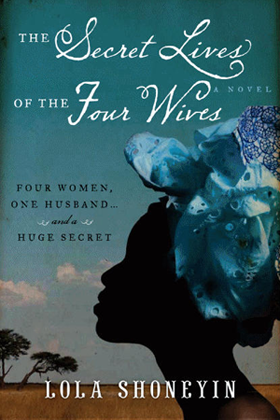
Written By: MIM!Nigerian poet Lola Shoneyin (whose father-in-law is Nobel Laureate Wole Soyinka) was born in Ibadan, Nigeria, and spent her childhood at boarding school in Edinburgh. She studied English at Ogun State University, and went on to teach English and Drama at an international secondary school in Nigeria. Last year, Lola made her stunning debut as an author with the novel The Secret Lives Of Baba Segi's Wives (also published under the title The Secret Lives Of The Four Wives), a perceptive, entertaining, and eye-opening story about the domestic drama that disrupts in a polygamous family living in modern-day Nigeria.

The characters: Baba Segi ... a plump, vain, and prosperous middle-aged man of robust appetites, Baba Segi is the patriarch of a large household that includes a quartet of wives and seven children. But his desire to possess more just might be his undoing. And his wives ... Iya Segi—the bride of Baba Segi's youth, a powerful, vindictive woman who will stop at nothing to protect her favored position as ruler of her husband's home. Iya Tope—Baba Segi's second wife, a shy, timid woman whose decency and lust for life are overshadowed by fear. Iya Femi—the third wife, a scheming woman with crimson lips and expensive tastes who is determined to attain all that she desires, no matter what the cost. Bolanle—Babi Segi's fourth and youngest wife, an educated woman wise to life's misfortunes who inspires jealousy in her fellow wives ... and who harbors a secret that will expose shocking truths about them all.

Thursday, October 14, 2010

Written By: The Nelson Mandela Foundation—"In real life we deal, not with gods, but with ordinary humans like ourselves: men and women who are full of contradictions, who are stable and fickle, strong and weak, famous and infamous."—Nelson Mandela.

Nelson Mandela is one of the most inspiring and iconic figures of our age. Now, after a lifetime of taking pen to paper to record thoughts and events, hardships and victories, he has opened his personal archive, which offers an unprecedented insight into his remarkable life.

Conversations With Myself gives readers access to the private man behind the public figure: from letters written in the darkest hours of Mandela’s twenty-seven years of imprisonment to the draft of an unfinished sequel to Long Walk to Freedom.

Tuesday, October 12, 2010

Written By: Nicole-Parker Jones—Nigerian writer Nnedi Okorafor is known for weaving African culture into creative evocative settings and memorable characters. She is know for her young adult fantasy novels, including Zahrah the Windseeker and The Shadow Speaker. Her latest novel, Who Fears Death, is set in a post-apocalyptic futuristic desert in Saharan Africa, and follows a young sorceress Onyesonwu (born Ewu)—whose name means "who fears death?" As Onyesonwu grows into her powers, it becomes clear that her fate is mingled with the fate of her people, the oppressed Okeke, and that to achieve her destiny, she must die. Okorafor examines a host of evils in her chillingly realistic tale—gender and racial inequality share top billing, along with female genital mutilation and complacency in the face of destructive tradition—and winds these disparate concepts together into a fantastical, magical blend of grand storytelling that Nnedi is known to deliver.

Nnedi shares about the book, "I started writing Who Fears Death just after my father passed in 2004. I was very very close to my father and writing was my way of staying sane. I based My Father’s Face [a chapter in the book] on a moment I experienced at my father’s wake when everyone had cleared out of the room and I found myself alone with his body. I was kneeling there looking at his face, thinking how much it no longer looked like him and how terrible that was. My morbid thoughts were driving me into deeper despair. Then suddenly I felt an energy move though me. This energy felt highly destructive, as if it could bring down the entire building. Almost all the details in the scene I went on to write were true, I felt them…well, up to the part where Onyesonwu makes her father’s body breath. As soon as I wrote that scene, everything else rushed at me. My father’s passing caused me to think about death, fear, the unknown, sacrifice, destiny and cosmic trickery."

Tuesday, May 11, 2010

Written By: Nicole Parker-Jones—Not many novelists would wander around the seedy red-light district of Antwerp, Belgium in a mini-skirt and thigh-high boots to carry out research for a novel. But this is what Nigerian writer Chika Unigwe did for her powerful novel On Black Sisters' Street.

On Black Sisters' Street is a moving and unsettling story about the many factors that lead African women into prostitution in Europe. The story follows the stories of Sisi, Ama, Efe and Joyce, four African women who are illegally trafficked into Belgium by pimp "Senghor Dele" who sells them the illusion of an affluent life in the West. Rich and ruthless, Dele specializes in exporting girls to work in Belgium for a modest fee of 30,000 euros, a fee the women must pay back by years of prostituting. The women, of course, don't know that this is what lies in store. Working in Belgium, we learn about the women's lives that have been torn apart by war, sexual abuse, and family breakdown, which led them to fall for Dele's exploits.

Chika Unigwe gives voice to women who are stripped of one, and breathes life into their existence. On Black Sisters' Street is not one to miss.

Thursday, May 6, 2010

Written By: Nicole Parker-Jones—Dear MIMI-istas, it's been a while since I've blogged in this space with my book reviews, but I have been busy reading so that I can return with some new reviews.

Just one month ago, Nana Ekua Brew-Hammond had her first book, Powder Necklace, published. The book, which Nana took 6 years to write, is about a teenager living in the UK who is sent to Ghana by her mother in an effort to protect her from the UK's "bad influences." As Nana explains, the book was inspired by her own childhood: "As a kid, I lived in Ghana for three years where I attended boarding school and encountered a small group of kids whose parents had also sent them to Ghana from Europe and the States. I wanted to write a book about that unique hybrid experience of being from two places at the same time, reconciling a first world superiority complex with respect for your immigrant parents, crisscrossing the globe to visit family "back home" and on other dots of the map, and figuring out how to answer when people ask you where you’re from—all while meeting the challenge of growing up."

This book had me immediately engaged, so much so that I finished it in two days! Although I cannot personally relate to the experience of being forced to grow up in different countries, Powder Necklace is about more than that, it is a universal story about trying to understand one's identity. As the long-time writer, first time novelist says about the book: "It tells the story of a heroine I'm so proud of—a sharp, honest young girl making the turbulent journey of adolescence across three continents ... It offers a new perspective on important issues that need fresh examination including: the superiority complex Westerners have regarding the so-called "Third World," the effect of single parenthood on girl children in particular, what it means to grow up American/British/etc when your parents are trying to raise you as a good African/Jamaican/Trinidadian/etc."

If you pick up the book, let me know what you think!

Monday, January 11, 2010

Written By: Nicole Parker Jones—Maaza Mengiste whose writing has earned her accolades such as “New Literary Idol” by New York Magazine and a Pushcart Prize nomination has published her first book, Beneath The Lion's Gaze. If you're looking for a piece of historical fiction (Beneath The Lion's Gaze depicts in part the reign of Emperor Haile Selassie), this "epic tale of a father and two sons, of betrayals and loyalties, of a family unraveling in the wake of Ethiopia's revolution" should be right up your alley.

Here's what we know about the book which will be released in the US today and in the UK on March 11:
This memorable heartbreaking story opens in Addis Ababa, Ethiopia, 1974, on the eve of a revolution. Yonas kneels in his mother’s prayer room, pleading to his god for an end to the violence that has wracked his family and country. His father, Hailu, a prominent doctor, has been ordered to report to jail after helping a victim of state-sanctioned torture to die. And Dawit, Hailu’s youngest son, has joined an underground resistance movement—a choice that will lead to more upheaval and bloodshed across a ravaged Ethiopia. Beneath the Lion’s Gaze tells a gripping story of family, of the bonds of love and friendship set in a time and place that has rarely been explored in fiction before. It is a story about the lengths human beings will go in pursuit of freedom and the human price of a national revolution. Emotionally gripping, poetic and indelibly tragic, Beneath the Lion’s Gaze is a transcendent and powerful debut.
You can find out more about Beneath The Lion's Gaze and read an excerpt by visiting maazamengiste.com.

Tuesday, November 10, 2009

Written By: Nicole Parker-Jones—Young, up-and-coming, Nigerian-British author Lola Jaye has three published works under her belt, and she's only just getting started! Lola's first novel, By The Time You Read This, follows the life of Lois Bates from age twelve to thirty, as she grows up in the company of her father Kevin, who passed away when Lois was just five-years-old, but left Lois with a manual to live by. Lola explains, "The manual tells her how to live, work and love and she tries her best to follow everything her dad has written, but sometimes it's hard." Lola's second publication Reaching For The Stars, was released in the UK in the Spring of this year as part of the UK’s “Quick Reads” program in which bestselling authors deliver short new works. Lola describes the book as a guide "on how to follow your dreams." Lola's third, and newest book, While You Were Dreaming, is described by Lola as a "modern day Sleeping Beauty story."

Read more about the inspiring novelista by clicking on the "Read More" link ...

Wednesday, November 4, 2009

Written By: Nicole Parker-Jones—For the first time in its history, France's top literary prize, the Prix Goncourt, was awarded to a black woman: French Senegalese author Marie Ndiaye. The Prix Goncourt was awarded to Ndiaye for her novel Trois Femmes Puissantes ("Three Powerful Women"), which is about three African women, each with one foot in France and the other in Africa (the novel is not currently available in English).

A prodigy, Ndiaye began writing at the age of 12 and published her first work when she was 17. Her 2001 work, Rosie Carpe, garnered her attention when she was awarded the prestigious Prix Femina literary prize. Despite touching on social themes (such as race and gender) in her oft-times surreal stories, Ndiaye has reportedly gone on the record to explain: "I don't represent anything or anyone. I have met many French people raised in Africa who are more African than I am."

Monday, October 26, 2009

Written By: Nicole Parker-Jones—Looking for a good mystery? How about Kwei Quartey's debut novel Wife of the Gods? The premise: in a small town in Ghana's Volta Region (Ketanu), a young promising medical resident working with Ghana's Ministry of Health's AIDS program is found dead under suspicious circumstances. Eager to close the case, the local police have arrested a poor teenage boy and charged him with murder. The police are less than thrilled when an outside force—Detective Inspector Darko Dawson—arrives from the big city of Accra to lead an inquiry into the mysterious case.

Inspector Dawson is an excellent detective armed with remarkable insight and a healthy dose of skepticism; with family ties to Ketanu, he is a perfect fit for the investigation, but nothing about his investigation is simple. In Ketanu, Inspector Dawson finds that his cosmopolitan sensibilities clash with age-old customs, including a disturbing practice in which teenage girls are offered by their families to fetish priests as "trokosi," or "Wives of the Gods." Katanu is also filled with emotional landmines for Inspector Dawson: an estranged relationship with the family he left behind and the painful memory of his own mother's sudden, inexplicable disappearance. The growing rift between Dawson's modern police work and a local inspector's refusal to move past traditionally accepted beliefs jeopardizes a successful arrest.

Lyrical and captivating, Quartey's Wife of the Gods brings to life the majesty and charm of Ghana-from the capital city of Accra to the small community of Ketanu where long-buried secrets are about to rise to the surface.

For more information, visit: www.kweiquartey.com.